Christmas Tree: The Best Varieties


Live Christmas Trees
So you've decided to have a real old-fashioned Christmas this year, including a real tree. Good for you! Your home will be filled with an intoxicating scent for weeks, adding to the festive atmosphere. But how do you know which species or variety of live Christmas trees to purchase? Are some better than others, or is it just a matter of personal preference? To get you started, a description of the most popular trees are found below.
Fraser Fir
This tree is perhaps the most popular of all the Christmas tree varieties in the US, and in general, the most expensive. It has a wonderful smell that lasts and lasts. The Fraser Fir's needles are usually an inch or less in length, and the tree is a beautiful forest green with just a hint of blue. The Fraser Fir also has excellent needle retention. The branches are layered and upswept, with plenty of space in between for hanging ornaments, and it's sturdy enough for heavy ornaments. These trees grow in the Southern Appalachians, but they ship well. The Fraser Fir is also resilient to fluctuations in temperature. Since this tree grows to a height of about 80 feet, you won't have to worry about finding one tall enough for your cathedral ceiling.
Colorado Blue Spruce
These trees have a natural pyramid, Christmas-tree shape. The trees are a beautiful greenish-blue, and some have an almost silvery sheen to them. The needles grow up to three inches long, and they're fairly resilient, but sharp and stiff, so this might not be the best tree if you have toddlers. The living Christmas tree that graces the lawn of the White House is a Colorado Blue Spruce, so if you choose one of these trees, you'll be in good company. Oftentimes, this variety of tree is not cut for harvest but is uprooted, with the rootball encased in burlap. If you purchase one of these living trees, you can plant it in your yard after the holidays are over, although they do not grow well in most Eastern states.
Scotch Pine
If you have large, heavy ornaments, you might want to consider a Scotch Pine as your Christmas tree. The branches are very strong and compact, resulting in lots of room for ornaments on the periphery of the tree, but little room for ornaments between the branches. The needles are dark green and somewhat waxy and grow to three inches long. This tree stays fresh for a long time, and even if it gets dry, it sheds few of its needles. This is one of the longest-lasting of any Christmas tree variety, and its wonderful fragrance is also long-lived.
Eastern Red Cedar
This bright green tree is a favorite in the South. It has a great fragrance, and its branches are compact. They are sharply upswept toward the crown. You won't find many holes or gaps in one of these cedars. One problem with this variety, however, is that its branches are fairly flimsy. If you choose this naturally cone-shaped tree, you might have to forego heavy ornaments and opt for smaller, lighter decorations for the Christmas tree.
Virginia Pine
This is another favorite in the South. The Virginia Pine withstands warmer temperatures better than most other Christmas tree varieties. The needles of this tree are a soft green, with shades of gray or silver. These pines do not naturally grow into a perfect cone - they have to be trimmed into the proper shape. This, however, will already have been done when you purchase the tree, whether from a tree farm or from a Christmas tree lot. With this tree, you can bring out those heavy ornaments; the branches are very sturdy.
Balsam
The balsam is a species of fir tree, with short, flat needles that are dark green. The trees are native to the northeastern U.S. and Canada and grow naturally in a layered pyramid shape. They’re one of the most popular Christmas tree varieties in the Northeast. Live balsam trees are rarely used in the South as Christmas trees, probably because they have to be shipped so far. The bark usually contains blister pockets that will “bleed” when punctured, releasing a fragrant resin. The balsam’s limbs and branches are fairly strong, so hanging small and medium-size ornaments isn’t a problem. The balsam holds it needles well, but not as well as the Fraser fir holds its needles. The tree often serves as a model for artificial Christmas trees.


Best Live Christmas Tree
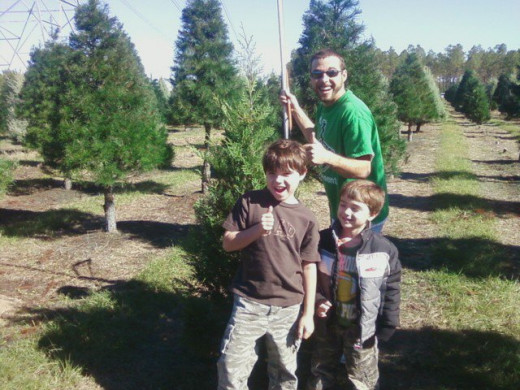
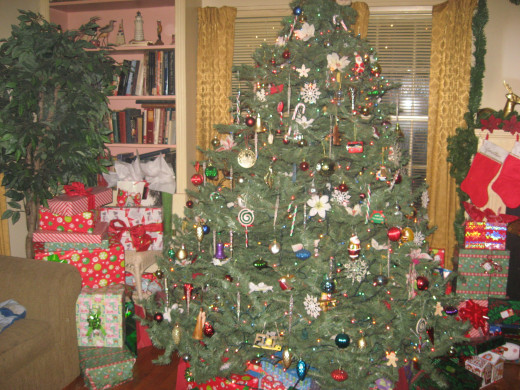
So...what's the best live Christmas tree you can have? As you've probably already figured out on your own, the answer is debatable. In my personal opinion, the Fraser fir is the best because of its aroma, its shape, and its hardiness. I'm not alone in my opinion, either. Of all Christmas tree varieties, the Fraser fir has been used more often as the official White House Christmas tree than any other variety. On the other hand, my youngest daughter thinks a cedar makes the best Christmas tree. She likes the smell and the fact that cedars are very full, with rarely any gaps. In reality, the best live Christmas tree is the freshest one you can find, so it's best to find one locally that you cut yourself. Check your local yellow pages for tree farms, and plan a trip with the family to cut your own Christmas tree.
More holiday tips:
- Hottest Toys for Boys: 2013
Check out the best toys for boys! Buy toys for boys before they sell out! - Hottest Toys for Girls: 2013
Discover the best toys for girls this year. Order now before they become scarce! - Hottest Toddler Toys for 2013
Discover the best toddler toys for this Christmas, and buy yours now at discount prices! - Creative Gift Wrapping Ideas, with How-To Videos
I love Christmas, and I love being creative. Wrapping gifts gives me the opportunity to enjoy both. Doing a little extra when it comes to gift wrapping lets the recipient know that you took extra care with... - How to Make Real Old-Fashioned Southern Cornbread Dressing: Step by Step
This is an old recipe for real Southern cornbread dressing the kind my mother and grandmother always made at Thanksgiving and Christmas. If you're searching for a low-calorie or low-fat recipe, THIS... - Easy Christmas Crafts: Salt Dough Ornaments
Have you ever thought about making your own Christmas ornaments? Salt dough is a wonderful medium for ornaments that requires no special skills and little expense. In fact, you most likely have the... - A Shortcut to Homemade Christmas Ornaments
Tired of using the same old ornaments year after year? Why not make your own this Christmas? Okay, lets say you're not particularly artsy-craftsyno problem! Don't start from scratch. Just... - How to Keep Your Christmas Tree Fresh
Nothing fills your home with the holiday spirit quite like a Christmas tree. A real tree will exude an invigorating, heady aroma that no candle or aerosol can will ever match. Unfortunately, real Christmas...